Live Sound 101: What to Look for in a Sound System for Events
Whether you’re hosting a conference, concert, or corporate event, it is important to understand the basics of a sound system. This guide will explain what to look for in an event sound system, covering the essentials from audio mixers to speaker placement, and offering expert tips to help you achieve flawless sound. By the end, you’ll have the knowledge to collaborate effectively with your audiovisual provider and ensure your event leaves a lasting impression.
Understanding the Basics of a Sound System
High-quality audio is critical to communicating your message and engaging your audience. Poor sound quality can have a negative impact on an event and can cause unintended consequences. You may not need to become an expert, but understanding the basics will help you when collaborating with your audiovisual provider.
Audio Mixer
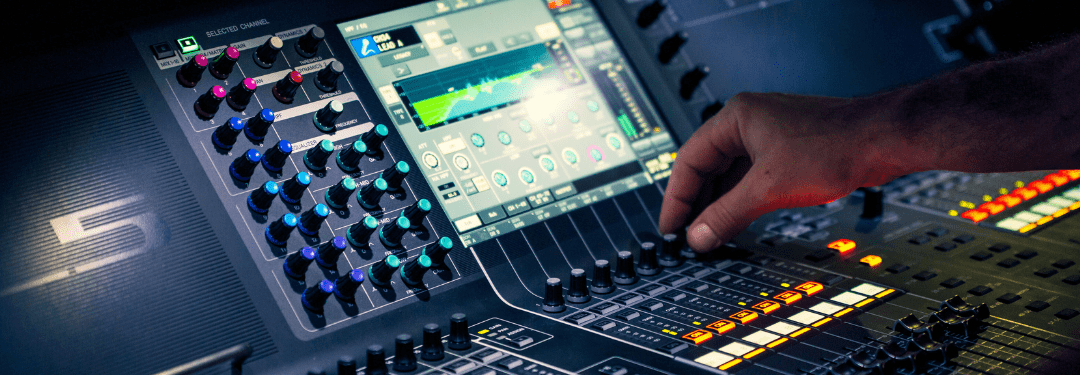
Sound systems for events include an audio mixer, which processes and combines audio signals before routing them to speakers. Modern digital mixers have become industry standard due to their flexibility, advanced routing, and the ability to save settings. Traditional analog mixers are becoming less common, but are also still in use for less complex or budget-conscious events.
Speakers
Speaker selection depends on venue size, crowd size, and whether the event is indoors or outdoors. Line-array speakers offer scalability, wide coverage and significant control. While line-array speakers are centrally located, point-source speakers are used when distributing speakers throughout the venue is preferred. Active speakers have built-in amplification and often include on-board signal processing. Passive speakers require external amplifiers and processing.

Microphones
The type and number of microphones depend on the event’s needs. Wired mics work well for stationary use, while their wireless counterparts allow mobility. Handheld mics are often used for vocal performances and speaking engagements. Lavaliers and head worn mics can be a good fit for theatre or hands-free presentations. Instrument-specific mics ensure proper sound capture for musical performances.
Power Amplifiers
These devices boost audio signals from the mixer to the speakers. The power level, measured in watts, must match the power requirement of the speakers.
Signal Processing
For added audio control and effects, outboard equipment like compressors, limiters, reverb, and delay can customize and enhance sound attributes.

Cables & Accessories
Common sound system accessories may include cabling, stands, rigging hardware and road cases. These accessories are vital for maintaining the integrity and functionality of your sound system.
Factors to Consider When Designing a Sound System
Venue
A major consideration is the event and venue size and type. The venue’s shape, ceiling height, and building materials affect sound quality. Larger venues need powerful systems to project sound effectively without distortion, ensuring clear sound across greater distances. The number of attendees also determines the necessary power and coverage.
Purpose
The purpose of the event is also important. Conferences need systems for speech intelligibility, while live music concerts require high-fidelity music reproduction. In addition, balancing cost and performance is crucial. Finding a professional audio system that fits your budget while meeting your event’s needs is key.
Practicality
Sound systems for events requiring frequent setup and teardown should be lightweight and easy to transport. The weather rating of equipment should be considered for events being held outdoors.
Staffing
The feature set and complexity of an audio system should be matched with the technical expertise of the operator. For best results, experienced audio engineers can be provided by your audiovisual provider. If you choose to operate it yourself, get educated. There are many online resources available from equipment manufacturers. Your equipment provider may also available to assist you in choosing the right equipment and to answer many of your questions.
Tips and Tricks for Designing Event Sound
When designing a sound system for an event, the choices you make can significantly impact the overall audio quality and audience experience. From selecting the right type of speakers to choosing the appropriate mixing console, each decision plays a critical role in delivering clear, powerful sound. Custom configurations tailored to your event’s specific needs will help you achieve the best results — here are a few tips and tricks:
1. Confirm that the venue has sufficient power to handle not just audio, but all aspects that will be in-use during the event (lighting, band, catering, etc.). Locate breaker panel(s) ahead of time.
2. The placement of speakers and microphones is crucial for sound quality and feedback control. Speakers should be positioned to cover the audience evenly without creating dead zones or excessive overlap. Microphones need to be placed to avoid picking up unwanted noise and feedback. Ensuring proper placement can make a significant difference in the clarity and balance of the sound.
3. Test the system before the event to ensure everything runs smoothly. Verify that wireless microphone frequencies are free of interference from other nearby devices. Inform presenters about common microphone techniques.
4. Equalization (EQ) is vital for optimizing sound quality and reducing feedback. Proper use of EQ can enhance clarity, balance frequencies, and tailor the sound to the venue’s specific acoustics. High or low-pass filters and parametric EQ are commonly used to address problematic frequencies and ensure a clean, clear audio output.
5. Pay attention to time alignment, which ensures that sound from all speakers reaches the audience simultaneously — critical in larger venues with multiple speaker setups. Misaligned speakers can muddy the sound. Using digital signal processors (DSPs) to adjust the timing allows you to synchronize audio output and create a cohesive listening experience.
6. As the venue fills with attendees, the required volume of your system increases, so make sure the system is slightly bigger than what your venue requires. Monitor and constantly adjust levels as needed throughout the event.
FAQs: Event Sound Systems
Here are some of the most common questions about sound systems for events—and their answers.
Q: What is the most important factor to consider when choosing a sound system for an event?
Q: How do I choose the right speakers for my event?
Q: Do I need a digital or analog audio mixer?
Q: How can I ensure high sound quality at my event?
Q: What are some tips for setting up a sound system for an outdoor event?
Q: Why is equalization (EQ) important in event sound systems?
Avoid the Guesswork and Let the Professionals Design Your Sound System
If you have an important event, chances are you’ve got your hands full. You may benefit from the technical expertise offered by an experienced provider. Starlite has the best equipment available, and when it comes to executing the ideal event, you can avoid the guesswork and leave it to us. Just as we have in our previous work, our experienced team will ensure that every element of your system is handled with precision and care.
With decades of experience our Event Technology team is ready for your project’s consultation.