Starlite Becomes an Official Creamsource Dealer

Starlite Becomes an Official Creamsource Dealer

Starlite Becomes an Official Creamsource Dealer 


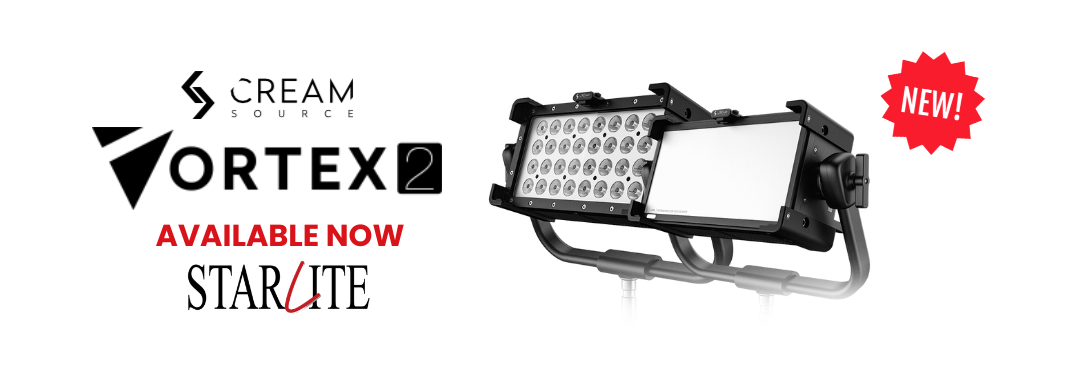
At Starlite, growth is the result of thoughtful partnerships, strategic investments, and a continued focus on giving our clients the best tools available. We’re proud to announce that Starlite is now an official Creamsource dealer. This means expanding our professional lighting portfolio with one of the most respected names in cinematic LED lighting.

This new dealership marks an important step in Starlite’s upward growth as a company. We’re excited to strengthen our ability to serve clients across all verticals while reinforcing our role as a consistent, one-stop shop for professional lighting solutions.

Expanding Starlite’s Professional Lighting Solutions

As lighting technology evolves, so do the expectations of our clients. From corporate environments and live events to broadcast, film, and education, today’s projects demand lighting that delivers accuracy, reliability, and flexibility without compromise.

By adding Creamsource to our lineup, Starlite expands the range of high-performance LED fixtures we can specify, support, and deliver. Which means ensuring our clients have access to proven tools that perform in real-world conditions.

Why Creamsource Is a Natural Fit for Starlite and Our Clients

Creamsource’s approach mirrors Starlite’s own philosophy: design solutions around how professionals actually work. Their fixtures are engineered with input from cinematographers, gaffers, and rental partners, resulting in products that balance cutting-edge technology with practical usability.

For our clients, this means new lighting options that integrate seamlessly with existing systems and workflows—backed by the same trusted Starlite team you already rely on for guidance, service, and support.

One Trusted Partner for Lighting Across Every Vertical

Starlite serves a wide range of industries, each with unique requirements, but all benefit from dependable, color-accurate lighting. As an official Creamsource dealer, we’re able to support projects across:


  • Film and broadcast 

  • Corporate AV and branded environments 

  • Live events and experiential productions 

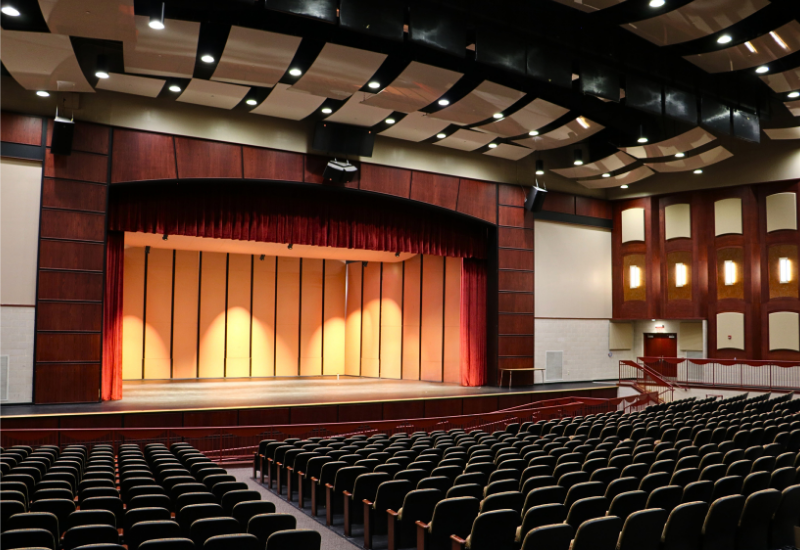
  • Education, auditoriums, and performance spaces

With this expanded offering, our clients can continue working with one partner, one relationship, and one source for professional lighting—simplifying planning, procurement, and long-term support.

Creamsource: A Proven Legacy of Cinematic LED Innovation

Creamsource’s reputation was built long before LED lighting became industry standard. The company traces its origins back to 2004, when it designed and built one of the first large-scale, high-power LED installations used in feature film production.

Developed for George Miller’s Happy Feet, this groundbreaking system delivered 6kW of reliable LED light for motion capture—setting the stage for Creamsource’s long-standing role as an innovator in professional lighting.


From Early LED Breakthroughs to Today’s Advanced Fixtures

Over the years, Creamsource has consistently pushed LED lighting forward:

  • 2006: Developed bespoke LED ring lights for cinematographers seeking fixtures built to withstand demanding sets  
  • 2009: Designed custom LED equipment for productions like X-Men Origins: Wolverine and released the Doppio 2’ x 1’ LED Panel, redefining expectations for LED performance  
  • 2012: Expanded the lineup with the Mini 1’ x 1’ Panel, delivering the same rugged reliability in a compact form  
  • 2014: Introduced the Creamsource Sky, a powerful 1200W, five-color LED system operating completely silent and fan-free  
  • 2016: Launched third-generation LED engines, upgrading Doppio and Mini fixtures to “+” specifications with improved CRI and TLCI  


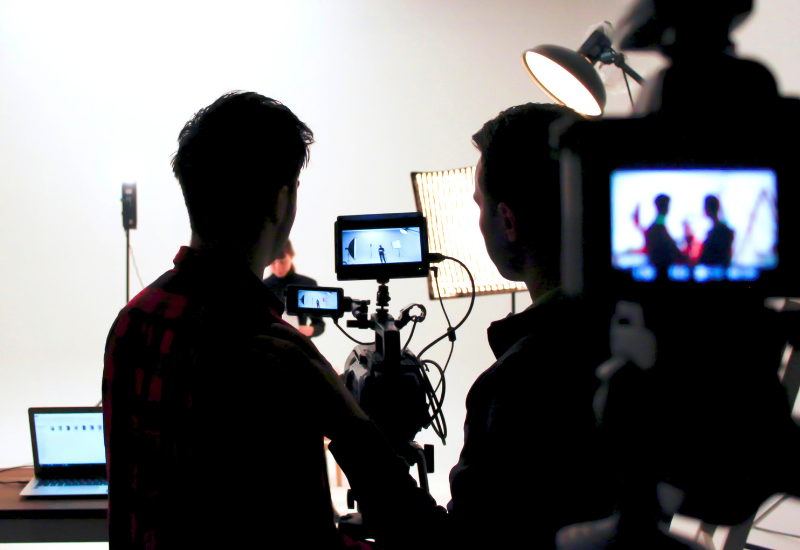
TV & Film

Today, Creamsource fixtures are trusted on productions including House of the Dragon, Dune: Part Two, Mission: Impossible – Dead Reckoning, Foundation and many more.


Designed for the Real World: Creamsource’s Product Philosophy

What sets Creamsource apart is its commitment to solving real on-set challenges. Their fixtures are designed to be durable, intuitive, and dependable—built not just to look impressive on spec sheets, but to perform day after day in demanding environments.

This philosophy aligns perfectly with Starlite’s focus on recommending products we trust, use, and can confidently support long after installation or delivery.

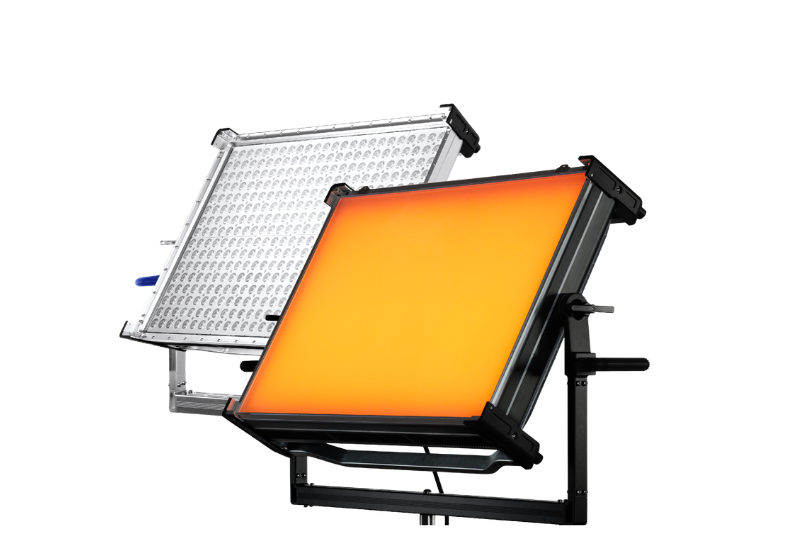
Creamsource Vortex24

Vortex24

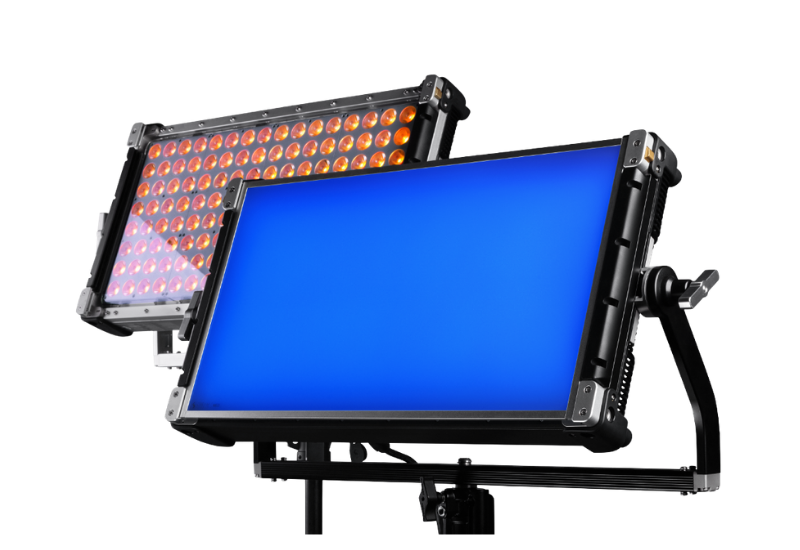
Creamsource Vortex8

Vortex8

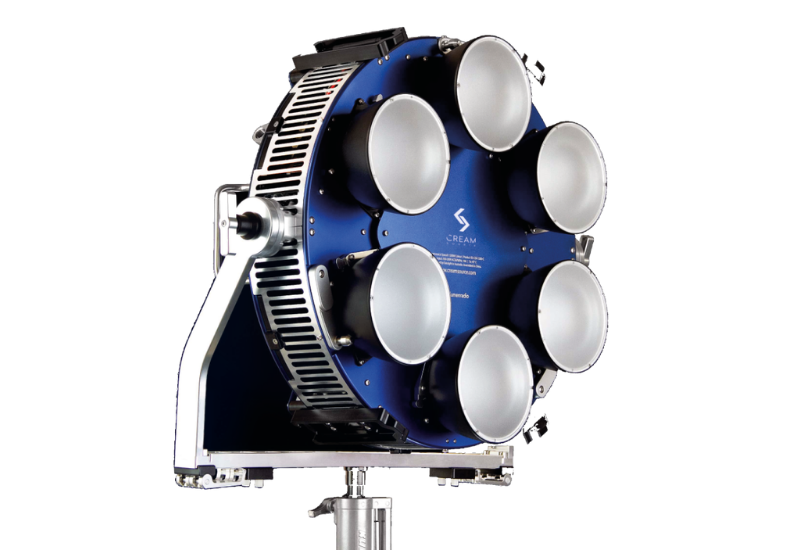
Creamsource Vortex24

SpaceX

Creamsource’s Next Chapter: Leadership, Growth, and Innovation

Creamsource is also entering an exciting new phase of growth with the appointment of Markus Zeiler in December of 2025 as Group Managing Director. Formerly CEO of ARRI, Markus brings decades of experience in LED development, global operations, and lighting leadership—having helped guide the industry-wide transition to LED technology.

With Markus overseeing operational growth, founders Tama Berkeljon and Sasha Marks are able to focus even more deeply on R&D and future product innovation. This leadership structure positions Creamsource to scale while staying grounded in the needs of working professionals.


What This Means for Starlite Clients

For our clients, becoming a Creamsource dealer means more options, more consistency, and more confidence in your lighting solutions. Whether you’re planning a production, upgrading a space, or designing a new system, Starlite can now deliver an even broader range of professional-grade lighting. On top of it all it’s supported by a team that understands your goals from start to finish.

We’re excited to welcome Creamsource into the Starlite family and look forward to putting these powerful tools to work for you.

Don’t forget to follow us on social:

2026 Latest Trends Report

2026 Latest Trends Report

The 2026 AV & Lighting Trends Report


AV Is Entering a New Era of Expectation

AV and lighting design are evolving faster than most spaces can keep up. Audience expectations have reset, operational demands have intensified, and the technology landscape is shifting. It’s moving from systems that simply function to systems that elevate how people engage. Across performance venues, educational environments, museums, entertainment properties, and trade show floors, the baseline for a “good” experience has risen dramatically. Today’s audiences compare every environment to the best they’ve seen anywhere else. Whether that’s a touring production, an immersive exhibit, or a polished livestream, technology has also expanded what’s possible. Tools that once required specialized expertise are more accessible, flexible, and adaptable. The result is a widening gap between what many existing systems can do and what organizations now need them to do. Systems designed eight to fifteen years ago weren’t built for hybrid events, dynamic lighting looks, flexible routing, high-contrast visuals, or modern coverage expectations. This report explores eight trends that signal where AV, lighting, and experience design are headed in 2026. Also, this report will describe what that means for organizations planning smarter, more adaptable spaces today. These trends reflect both the current trajectory of technology and the emerging expectations shaping how spaces will need to perform in the years ahead.

Trend 1: LED Lighting as the Universal Baseline


LED lighting is no longer an upgrade path. It is now the groundwork for every modern space. As incandescent fixtures fade out and maintenance-heavy systems reach end-of-life, LEDs have become the default for auditoriums, exhibits, museum environments, performance spaces, and branded installations. What’s changing heading into 2026 is not simply the adoption of LEDs, but the sophistication of how lighting is being used. Color-capable fixtures, smoother dimming curves, and more refined control options are enabling spaces to shift tone, mood, and purpose instantly. Lighting infrastructure is becoming more scene-based and more flexible, supporting everything from high-impact performances to subtle exhibit environments and multipurpose presentations. Control is now as important as the fixtures themselves. Modern lighting systems rely on thoughtful integration. This includes DMX distribution, networked nodes, and intuitive interfaces that allow staff to select repeatable looks without complex programming. As a result, lighting is evolving from a static tool into a dynamic part of experience design.

2026 DIRECTION:

Lighting becomes a storytelling instrument across all venue types. Expect continued movement toward smarter presets, fluid transitions, and immersive environments that support varied programming without increasing operational complexity.

2026 DIRECTION:

Audio systems are becoming more modular, more adaptive, and more dependent on thoughtful acoustic strategy. Intelligibility is becoming a primary performance metric influencing both system architecture and long-term planning.

Trend 2: Distributed, Networked Audio Becomes the Standard for Intelligibility

Clear, consistent audio has become one of the most defining factors in how an audience perceives the quality of a space. That shift is driving a transition away from centralized loudspeaker clusters toward distributed coverage models that deliver intelligibility evenly across the room. Networked audio—using protocols like Dante and AVB—continues to cement itself as the backbone of modern audio systems. These architectures enable flexible routing, expansion, remote monitoring, and integration across audio, video, and control systems. Alongside this, modern DSP platforms are playing a larger role in shaping clarity, coverage, and consistency through advanced tuning and zoning.

This direction is emerging across a wide spectrum of environments:

  • Performance halls that require precise reinforcement for music and speech.
  • Museum exhibits built around narration and ambient soundscapes.
  • Trade show activations where clarity competes with environmental noise.
  • Multipurpose spaces that must support everything from presentations to performance.

Trend 3: Visual Storytelling Expands to LED Walls, Projection, and Media Integration

Visual infrastructure is becoming one of the strongest drivers of how a space communicates identity and purpose. Where video once served as a functional tool (slides, playback, basic IMAG), it’s now shaping the entire experience of a room. LED walls, high-brightness projection, and flexible media systems are increasingly designed into the space rather than added on top of it. This shift appears across nearly every environment: schools using LED walls as dynamic scenic backdrops, museum exhibits relying on projected environments to tell richer stories, casinos incorporating large-format displays as architectural elements, and portable event or trade-show setups that use modular LED systems to create immersive brand moments. As visual expectations rise, the underlying infrastructure must rise with it. Hybrid and broadcast needs are also influencing design decisions. Spaces that once served only in-person audiences now require camera positions, lighting considerations for capture, and integrated switching systems that support recording or streaming without reconfiguring the room.

2026 DIRECTION:

Visual infrastructure becomes more inseparable from spatial design. Displays, projection surfaces, and media elements will be planned into architecture and programming from the outset, enabling spaces to create intentional “media moments” instead of relying on temporary or improvised solutions.

2026 DIRECTION:

Spaces move toward unified ecosystems where lighting, audio, video, and automation feel like one system rather than isolated components. Expect more single-interface control approaches, more thoughtful presets, and deeper coordination between AV and IT teams to support secure, seamless operation.

Trend 4: Integration & Control: Simplicity, Security, and Cohesion Drive Adoption

As systems grow more capable, the need for cohesive, intuitive control grows even faster. The most significant advancements heading into 2026 are in how those components work together. AV, lighting, and automation systems are converging into unified control environments that prioritize simplicity, reliability, and repeatability for the teams who use them every day. Organizations want systems that start cleanly, transition smoothly, and minimize the technical burden on staff. A consistent interface, predictable presets, and clear operational workflows are increasingly central to system design. This applies equally to auditoriums, museums, multipurpose rooms, corporate environments, and live event spaces. As AV-over-IP becomes the organizing framework for many systems, security and infrastructure coordination are moving earlier in the process. Network design, VLANs, device authentication, and IT collaboration aren’t “optional conversations”, they’re part of creating systems that perform reliably and safely.

Trend 5: Immersive Experience Design Moves from Special to Standard

Immersive AV design is no longer confined to high-budget productions or destination attractions. Layered lighting, ambient audio, projection-based environments, and dynamic visual elements are now appearing in a much wider range of spaces as expectations evolve. Audiences are increasingly drawn to environments that feel intentional, atmospheric, and emotionally engaging — even when the primary purpose of the room isn’t performance. This shift is happening across museums, exhibits, brand activations, school auditoriums, and community multipurpose spaces. Temporary installations and traveling events are adopting scenic lighting and media integration to create distinctive environments without extensive buildouts. Permanent venues are blending architectural elements with AV systems to shape how visitors move, focus, and experience each moment in the space. As experiential design becomes more accessible, the distinction between “production” and “permanent installation” continues to blur. Spaces are no longer designed for a single mode of operation; they must support a spectrum of experiences that can change from day to day or even hour to hour.

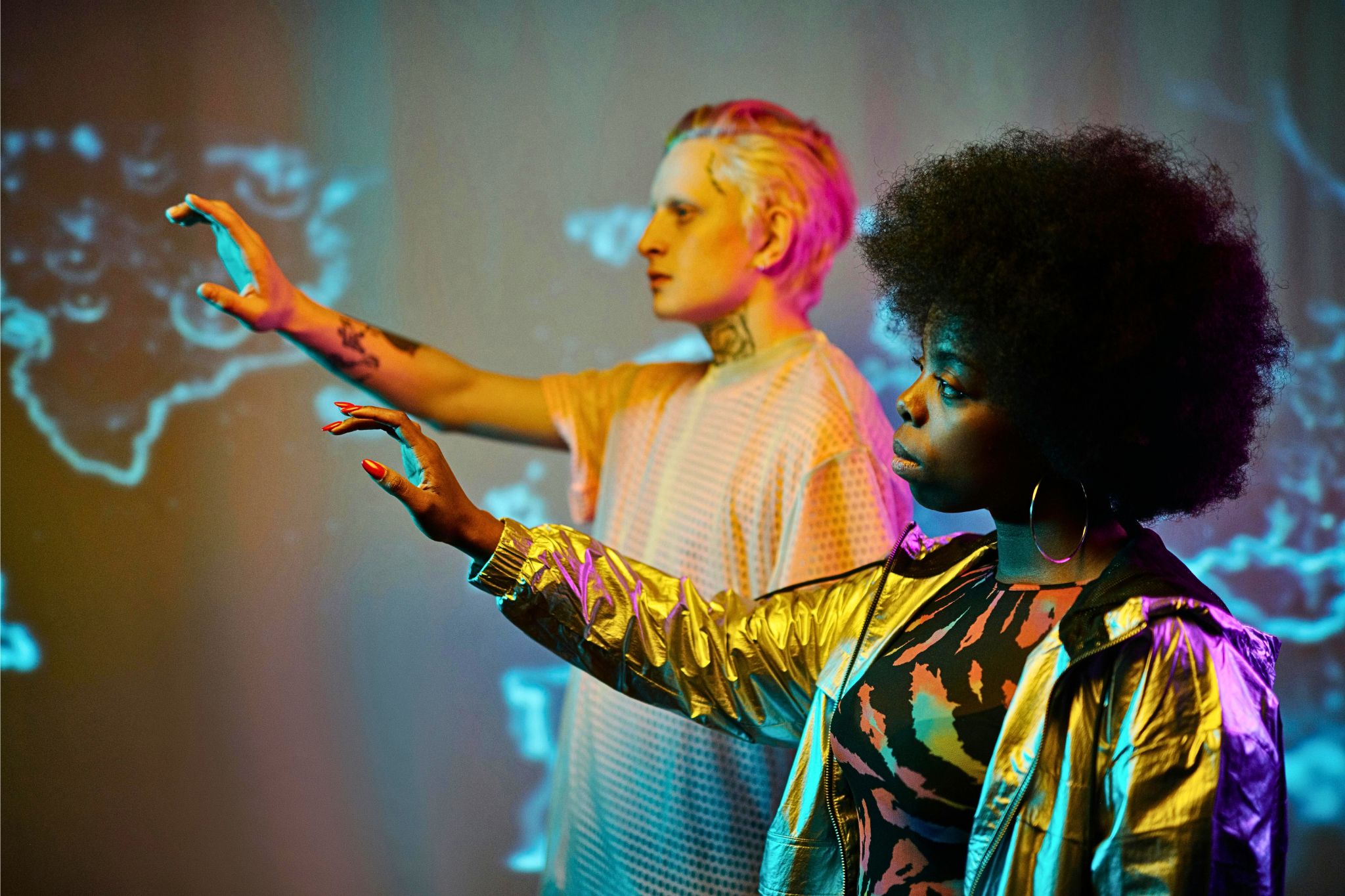
Immersive Experience

2026 DIRECTION:

Immersion becomes a baseline design principle. AV increasingly functions as both infrastructure and emotional design, enhancing wayfinding, storytelling, engagement, and the overall feeling of a space.

2026 DIRECTION:

Schools increasingly pursue systems that deliver professional-level results through accessible workflows. The goal is not to recreate what a performing arts center is, but to bridge the gap between educational use and the production standards that audiences and communities now expect.

Trend 6: K–12 Modernization Accelerates Higher Production Value, Multi-Use Spaces

School environments are undergoing a significant shift in how AV systems are used and expected to perform. Auditoriums, multipurpose rooms, cafeterias, gymnasiums, and classrooms all rely on AV for an expanding set of functions like:

  • Theatrical performances
  • Instruction / Streaming
  • Professional development
  • Community events, ceremonies
  • District-wide communication

Many of these systems were installed more than a decade ago and are reaching the limits of their reliability and flexibility just as expectations are rising. Schools are now evaluating upgrades not only to replace aging infrastructure but to meet broader programmatic needs. Production quality is becoming more important as events are livestreamed, archived or shared with families and stakeholders. People expect clear audio, bright visuals, and polished presentation. So flexibility and ease of use are central to this trend. Spaces must support a wide range of users—from students to teachers to external groups—while operating reliably with minimal technical intervention. Multi-use design influences everything from lighting layouts to audio coverage to how projection or display systems are integrated.

Trend 7: Multipurpose Entertainment & Exhibit Environments Demand Flexibility

Entertainment venues, museums, performing arts centers, and trade show environments are being asked to do more and change modes more quickly. So, a single space may need to present a keynote, host a performance, support brand activation, and operate as a general admission environment, often within the same day. This level of variability requires AV systems that are not only robust, but inherently flexible. Lighting, audio, and video systems are increasingly designed with modularity in mind. Configurations must support different stage or floor layouts, varied audience footprints, and shifting content demands without extensive reprogramming or technical intervention. Portable elements—lighting ladders, projection surfaces, LED displays, speaker zones—are being integrated into permanent design in ways that allow staff to reconfigure the environment with minimal effort. This trend is not limited to high-production events. Museums are adopting flexible lighting and projection to refresh galleries without major renovations. Trade show booths rely on modular AV components that can adapt to different footprints or storytelling needs. Performing arts centers are leveraging adaptable systems to support both traditional productions and non-theatrical community events.

2026 DIRECTION:

Spaces increasingly move toward modular AV infrastructures designed to support multiple identities. A venue may function as a theatre one day and a brand activation the next, with the same core systems powering both experiences. Here, flexibility becomes the competitive advantage.

2026 DIRECTION:

Planning becomes more strategic and more phased. Organizations modernize with clearer priorities, better coordination, and systems designed to evolve over time to achieve higher-quality outcomes without overextending budgets.

Trend 8: Long-Horizon Planning & Phased Execution Become the Smart Path Forward

As expectations rise and systems grow more interconnected, organizations are treating AV as long-term infrastructure rather than isolated equipment upgrades. This shift is driving a more strategic approach to planning where modernization is mapped across multiple years and aligned with funding cycles, staffing needs, and broader organizational priorities. Multi-year roadmaps help communities plan sustainably. Rather than attempting an all-at-once upgrade, organizations can prioritize high-impact improvements, prepare infrastructure for future phases, and sequence investments in a way that supports both immediate needs and long-term performance. This approach reduces disruption, spreads costs more predictably, and ensures that each phase builds toward a cohesive, integrated system. Early collaboration is a defining feature of this trend. AV, IT, electrical, architectural, and construction teams are increasingly engaged together at the design stage rather than in isolation. This prevents costly rework, avoids mismatched assumptions, and ensures that conduit, power, network capacity, and sightlines are planned with intention rather than retrofitted after the fact.

Designing for What’s Next

The most meaningful AV trends heading into 2026 are all about shifting expectations, expanding possibilities, and new ways of engaging audiences. Moreover, lighting, audio, video, and control systems are becoming more adaptive, more integrated, and more central to how spaces function and feel. Environments that once served a single purpose now support a spectrum of uses, and the experiences delivered in those spaces increasingly shape how organizations are perceived.

Spaces that plan strategically now— thoughtfully, flexibly, and with the future in mind—will be the ones that feel modern, intuitive, and compelling in the years ahead. Modernization doesn’t have to mean complexity. It simply requires clarity, coordination, and systems designed to grow with you.

If you’re planning a renovation, exploring phased upgrades, or rethinking how your space needs to perform in the future, we can help you chart the path forward. Tell us about your project, and let’s design for what comes next.

Don’t forget to follow us on social:

Manufacturer Spotlight: Ayrton Lighting

Manufacturer Spotlight: Ayrton Lighting

Ayrton Lighting — Precision, Power, and Performance Without Compromise

Some manufacturers follow trends.

Others create them.

Ayrton firmly belongs in the second category.

Founded in 2001 just outside Paris, France, Ayrton was born from a collaboration between lighting professionals, technologists, and industrial designers who shared one goal: push intelligent lighting further than anyone else thought possible. More than two decades later, that mindset still defines the brand and explains why Ayrton fixtures are consistently specified for television studios, theatres, arenas, and high-profile live events worldwide.

At Starlite, we do more than sell Ayrton. We invest in it. Not only do we offer Ayrton as a rental option, but we trust them for our own productions and events. 

A Brand Built on Engineering and Intention

Ayrton’s name and iconic yellow color are a tribute to legendary Formula One driver Ayrton Senna, a nod that feels particularly fitting once you understand the company’s design philosophy. Like elite motorsports engineering, Ayrton fixtures balance raw power with precision control, efficiency, and reliability.

From day one, Ayrton has focused on intelligent LED lighting for entertainment and architectural applications. Their in-house R&D team brings together experts in mechanical, electronic, and software engineering who translate avant-garde concepts into fixtures that are not only innovative, but field-proven.

That is why Ayrton luminaires are a regular presence on productions that demand accuracy, repeatability, and absolute confidence night after night.

Sustainability Through Longevity

Ayrton’s commitment does not stop at innovation. The company places real emphasis on product lifecycle support, offering technical documentation, maintenance guidance, and service training through its distribution network. Even discontinued products remain supported with accessible documentation, helping extend usable life and reduce unnecessary replacement.

In an industry where fixtures are expected to perform for years under demanding conditions, that long-view approach matters.

From EYECOLOR to Rivale: A History of Firsts

Ayrton’s first fixture, the EYECOLOR, debuted in 2002 and immediately set the tone. Equipped with 192 LEDs, it delivered rich color without complex mechanical systems, a radical idea at the time. That same spirit of simplification through smarter engineering has guided the product line ever since.

From early innovations to today’s advanced profile, beam, and wash fixtures, Ayrton has continuously refined effects, optics, color systems, and movement accuracy. The result is a portfolio that does not chase gimmicks, but instead raises the baseline for what professionals expect from intelligent lighting.

Why Starlite Chooses Ayrton

At Starlite, we make it a point to buy into the fixtures we sell. If we are recommending a product to our clients, it is because we believe in its performance, durability, and long-term value. Ayrton checks all of those boxes.

Two fixtures in particular have earned a permanent place in our lighting inventory and on our projects: the Ayrton Veloce Profile and the Khamsin S Profile.

Ayrton Veloce Profile: Precision with Authority

Veloce Profile is a luminaire that feels purpose-built for designers who want control without compromise.

Its proprietary 13-lens optical system delivers a massive 13:1 zoom range, from a razor-sharp 4° beam to a wide 52° field. The 180 mm front lens produces an ultra-intensive beam that cuts cleanly through haze and distance, making it equally at home on large stages and detailed scenic applications.

Color is where Veloce truly shines. The single-layer CMY color mixing system with ultra-fast, high-definition discs delivers saturated, punchy color with exceptional consistency. A progressive CTO allows smooth adjustment from 2900 K to 6500 K, while a seven-position color wheel adds flexibility for creative accents. For applications demanding accurate color reproduction, the CRI can be finely adjusted from 70 to 86.

Add to that an ultra-precise framing module capable of isolating objects anywhere in the beam with surgical accuracy, and you have a fixture that rewards both technical discipline and creative risk-taking.

We proudly send Veloce Profile out on tours and productions through our rental division because we know it performs exactly as expected, every time.

If you are interested in adding Veloce Profile to your next project, our team is ready to help you spec or rent the right solution.

Ayrton Khamsin: Compact Power That Turns Heads

Khamsin is what happens when Ayrton decides to squeeze extraordinary output into a remarkably compact form factor.

By completely redesigning the internal structure and using cast aluminum sides, Ayrton delivered a fixture that packs serious horsepower without excess bulk. The Khamsin S version delivers up to 40,000 lumens with a 7000 K color temperature, while the Khamsin TC version prioritizes color accuracy with a CRI greater than 90 and outstanding TM-30 performance.

The proprietary 13-lens optical system provides an 8:1 zoom range from 7° to 58°, producing an even, flat beam with no hot spots and exceptional image clarity. Whether you are running gobos, prisms, or clean texture, the output remains consistent and controlled.

Khamsin’s effects package is extensive: dual rotating gobo wheels, animation effects, rotating prisms, iris, frost options, and a full CMY color mixing system with variable CTO. Framing shutters allow precise shaping across the entire beam, regardless of fixture position.

Designed for arenas, stadiums, and major event venues, Khamsin is equally impressive in television and broadcast environments thanks to flicker-free source management.

Despite its power, the fixture weighs approximately 87.7 pounds, making it surprisingly manageable for its output class.

A Longstanding Partnership

Starlite has been an authorized Ayrton dealer for many years, and that relationship continues because the product consistently delivers. Whether you are purchasing for a permanent installation, specifying for a touring system, or sourcing fixtures through our rental inventory, our team has hands-on experience with Ayrton’s lineup.

If you are interested in any Ayrton products, from profiles to washes and beyond, we are ready to support you from specification through deployment.

Ayrton is not just a manufacturer we represent. It is a manufacturer we rely on.

And that makes all the difference.

Don’t forget to follow us on social:

Allen & Heath Consoles: Why Starlite Trusts Their Digital and Analog Mixers for Rentals & Installations

Allen & Heath Consoles: Why Starlite Trusts Their Digital and Analog Mixers for Rentals & Installations

Manufacturer Spotlight: Allen & Heath – Consoles We Trust


At Starlite, we understand that in professional audio, the quality of a mixer defines the entire system’s performance. Whether we’re supporting a live corporate event, equipping a school auditorium, or integrating a new sound system into a performance venue, reliability, flexibility, and sonic transparency are non-negotiable. That’s why Allen & Heath consoles remain a cornerstone of both our rental inventory and our Systems Integration designs.

From their handcrafted analog roots in the London music scene to today’s state-of-the-art digital mixing platforms, Allen & Heath has built a reputation for precision engineering, intuitive user experience, and unmatched build quality. These values align perfectly with Starlite’s mission to deliver excellence in every AV project.

A Legacy of Innovation in Audio

Founded in 1969, Allen & Heath emerged at the forefront of Britain’s audio engineering revolution, building custom mixers for bands like Pink Floyd, Genesis, and The Who. These early designs established the company’s reputation for clean signal paths, robust circuitry, and innovative ergonomics, traits that continue to define their modern consoles.

More than five decades later, Allen & Heath remains an industry benchmark. Their digital console range represents a new era in live sound technology, capable of sub-millisecond latency and unparalleled DSP power. Designed, developed, and tested in Cornwall, UK, every console is shaped by real-world engineering feedback from active touring professionals, ensuring performance that meets the demands of both live and installed environments.

Their philosophy, “heritage, innovation, and a mission to just keep doing it better,” continues to drive their evolution from classic analog desks to advanced networked digital systems.

Why Starlite Relies on Allen & Heath

At Starlite, we’ve chosen Allen & Heath for the same reason top touring engineers and integrators do: consistency, versatility, and sound integrity.

In our rental inventory, we feature consoles designed to excel under demanding conditions:

Avantis 64-Input Digital Mixer 

Powered by the 96kHz XCVI FPGA engine, Avantis delivers exceptional sonic performance with ultra-low 0.7ms latency. Its dual 15.6” HD touchscreens and Continuity UI streamline navigation, while the full metal chassis ensures durability on the road. Integrated dLive-class processing, flexible bus architecture, and seamless Shure and Sennheiser RF integration make it a trusted choice for corporate AV, broadcast, and high-end live productions.

SQ Series Mixers

The SQ series bridges touring-grade processing with a compact form factor. With 48 input channels, DEEP processing architecture, 12 stereo mixes, and 64×64 I/O audio networking, these consoles are ideal for mid-scale performance spaces and educational installations. They provide powerful features like multitrack recording via USB and integration with Dante or SLink expanders—enabling scalable, networked audio solutions.

ZEDi-10FX & GL2200

For smaller venues, mobile productions, and hybrid analog setups, the ZEDi-10FX offers a studio-grade preamp design and USB interface capabilities, while the GL2200 remains a touring classic, valued for its warm, transparent analog sound and bulletproof reliability. Together, they showcase Allen & Heath’s commitment to versatility—from compact mixers to flagship consoles.

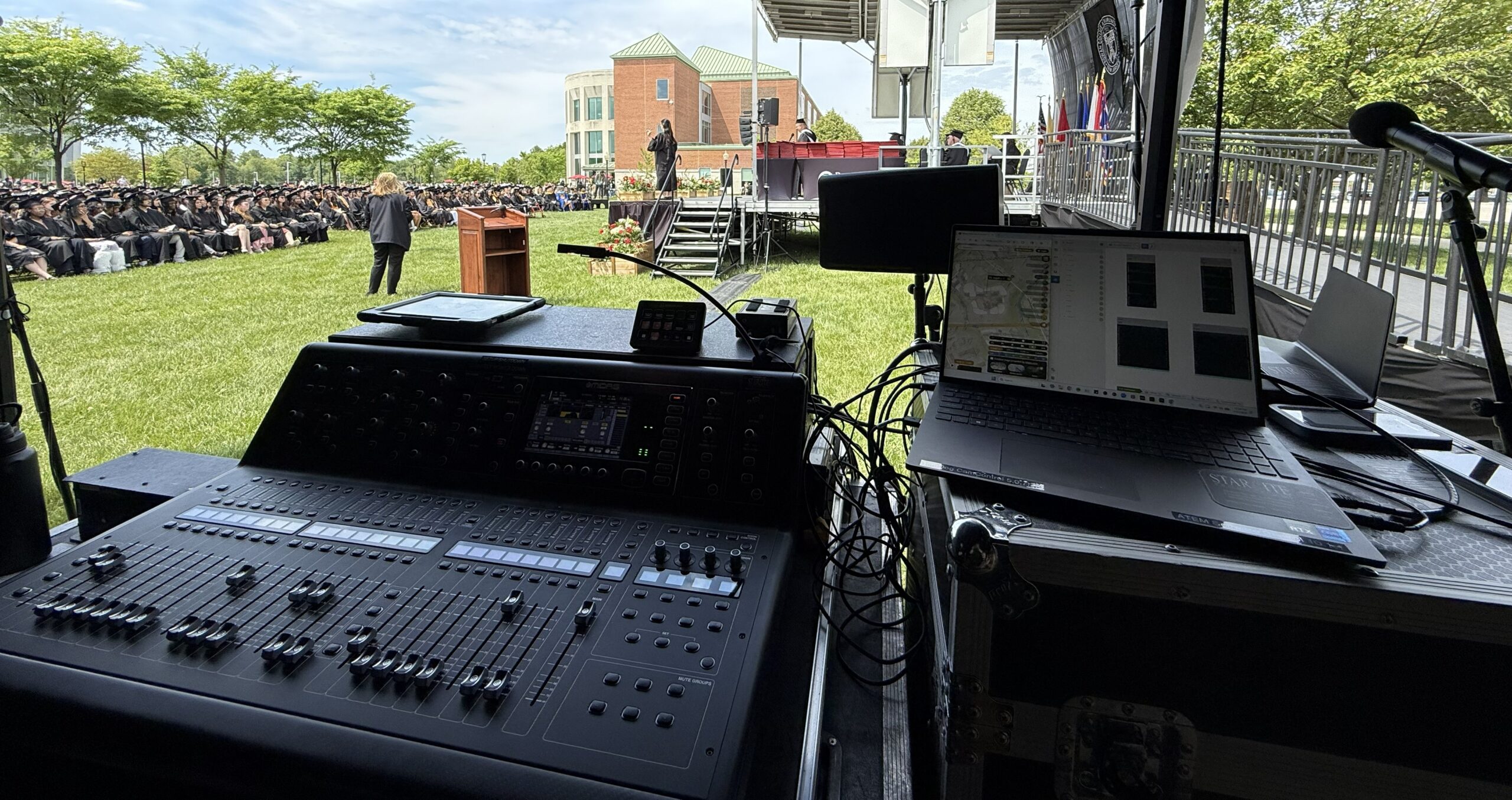
These systems allow our technicians and clients alike to experience accurate, consistent audio performance whether mixing a theatrical production, a graduation ceremony, or a high-profile corporate presentation.

Designed for Live, Installation, and Education

Beyond live production, Allen & Heath has become a leader in fixed installation audio. The AHM series matrix processors (including the AHM-64, AHM-32, and AHM-16) bring high-end digital signal processing and networked audio control to a variety of environments from schools and houses-of-worship to restaurants, hotels, and boardrooms.

Their consoles and processors integrate natively with Dante, AES67, and Allen & Heath’s ecosystem of expanders and controllers, making them ideal for flexible AV systems. These tools empower integrators to deliver scalable, user-friendly audio systems that can grow with an organization’s needs.

For our integration team, Allen & Heath represents the perfect blend of technical sophistication and practical usability. Educators and operators appreciate the intuitive interface, while professional engineers value the advanced processing headroom and precision mixing capabilities. 

Training, Support, and Community for AV Professionals

Allen & Heath develops exceptional technology and builds a community around it. Their global training programs, certification courses, and in-person workshops help engineers and operators expand their technical expertise. Whether through online tutorials or direct manufacturer support, users gain the confidence to maximize every feature of their console.

This dedication to education mirrors Starlite’s own philosophy: empowering clients with the tools and knowledge to achieve the best results from their AV systems.

Allen & Heath: Learning and Education

Trusted for Rentals, Installations, and Beyond

From the compact ZEDi Series to the flagship dLive and Avantis platforms, Allen & Heath continues to push the boundaries of what’s possible in live sound and system integration. At Starlite, we trust their consoles because they’ve proven themselves time and again—delivering stability, sonic excellence, and future-ready flexibility for every project we take on.

Whether you’re managing a performance venue, upgrading a school auditorium, or producing a corporate event, Allen & Heath provides the foundation for reliable, professional-grade sound.

Don’t forget to follow us on social:

A Smarter Way to Approach Church AV Integration

A Smarter Way to Approach Church AV Integration

Worship spaces today serve more than the congregation in the pews. Services are streamed online, volunteers run tech from the back of the room, and expectations for sound, video, and lighting are higher than ever. Whether you’re in a small sanctuary or a multi-campus ministry, having the right audiovisual (AV) system in place can make the difference between a distracting experience and a meaningful one.

AV integration doesn’t have to be overwhelming. The key is designing systems that fit your space, your goals, and your team’s comfort level. Here’s what you should know about finding the right church AV setup.


Why AV Integration Matters for Worship Spaces

Churches aren’t concert halls or corporate conference centers; however, they still need AV systems that are reliable, easy to use, and capable of creating connections. Good integration makes everything feel seamless: the pastor is clearly heard, the livestream doesn’t glitch, and volunteers aren’t scrambling during the sermon to fix a mic or adjust a spotlight.

A thoughtful AV setup also builds consistency. When your systems are designed to work together—from audio and video to lighting and livestreaming—each service runs more smoothly regardless of who’s behind the board that day. With many churches relying on volunteers or part-time staff, intuitive operation matters just as much as technical performance.

In short, integration doesn’t stop at the gear. It should also help remove friction so your team can focus on what matters most.

Saint Elizabeth Roman Catholic Church

Integration Project: Saint Elizabeth Roman Catholic Church

What AV System is Best for Churches?

There’s no one-size-fits-all setup for church AV, and that’s a good thing. The best system is one that reflects your space, your service style, and your team’s capabilities.

For smaller churches, a streamlined system might include a quality PA, wireless microphones, basic stage lighting, and a single camera for livestreaming. Larger congregations might need networked audio, multiple displays, motorized cameras, or centralized control systems that simplify everything from lighting scenes to livestream transitions.

But no matter the size, the goal is the same: consistency, clarity, and ease of use. Your team shouldn’t need to be tech experts to make Sunday morning work.

A good AV integration partner will help you assess:

Room acoustics and layout
Worship style and production needs
Existing equipment that can be reused or upgraded
Volunteer skill level and tech comfort
Livestreaming goals and online audience expectations

When these factors are considered from the start, your AV system will do what it’s supposed to—support the service  without calling attention to itself.


How Churches Can Integrate Audio and Video Systems

Integration is less about buying the flashiest equipment and more about making everything work together. The process starts with understanding what your church actually needs. That means looking beyond generic gear lists and instead designing a system around your unique space and service flow. Here is how that typically works:

Discovery and Needs Assessment:
A walkthrough of your worship space to understand acoustics, sightlines, and service structure—plus a conversation with your team about challenges and goals.

System Design:

Experts create a customized plan that connects the right components (like speakers, mixers, cameras, displays, lighting, and cabling), ensuring compatibility and simplicity.

Installation and Testing:

Once equipment is selected, it’s installed and tested to ensure reliability. The wiring must be clean, sound checks are thorough, and visual elements are fine-tuned.

Training and Support:

The handoff matters. Volunteers or staff are trained on how to use the system efficiently, and long-term support is available when something needs a tweak or upgrade.

It’s all about building a solid foundation that gives your church flexibility without complication. A well-integrated AV system should make services easier to run, not harder.

How Much Does AV Integration for a Church Cost?

Every church is different. Some need a full system overhaul, others just need to replace a few outdated components. Some are outfitting a new sanctuary from the ground up, while others are working within historic buildings with unique acoustic challenges.

That’s why Starlite doesn’t push cookie-cutter packages. We listen first, then build a plan that fits your needs and your budget. We work with a wide range of manufacturers, from high-end to budget-friendly, to create solutions that get the job done without unnecessary add-ons or inflated price tags.

We also understand that many churches are working with limited budgets and volunteer-run tech teams. We respect that reality and approach every project with transparency and flexibility. Whether you need a long-term integration roadmap or a quick fix to get you through Sunday, we’ll help you find the right path forward.

What Happens When AV Works Like It Should

When your audio, video, and lighting systems are integrated and functioning as they should, the focus shifts back to the service where it belongs. Sermons come through clearly. Volunteers run the board with confidence. Livestreams don’t cut out mid-service. The congregation stays engaged, whether they’re in the pews or watching from home.

You won’t notice the AV system because it’s doing its job to make the experience smoother. That’s the power of thoughtful integration—removing friction without calling attention to itself.

Churches in our region come to Starlite because we understand their reality. We don’t expect you to be tech experts, and we won’t recommend equipment you don’t need. What we do offer is decades of experience, personal attention, and a team that’s here to make your job easier. We design systems that are easy to operate, tailored to your space, and built to last. And if something does go wrong, we’re here to help fix it immediately.

Starlite doesn’t take on every job. But when it’s the right fit, we’re in it with you for the long haul. Whether you’re planning an upgrade, exploring livestreaming, or just trying to get through this weekend’s service without tech issues, our team is ready to help.

Don’t forget to follow us on social: