By Brandon Creel ETCP, CTS-D, Former Starlite Director of Engineering
When you’re outside your worship space, grab a pen and paper and make a list of everything you can think of that’s hanging over head. Then walk into the sanctuary and look up. Did you miss anything? Odds are you did. And odds are even greater you’re not sure that everything up there is hanging safely.
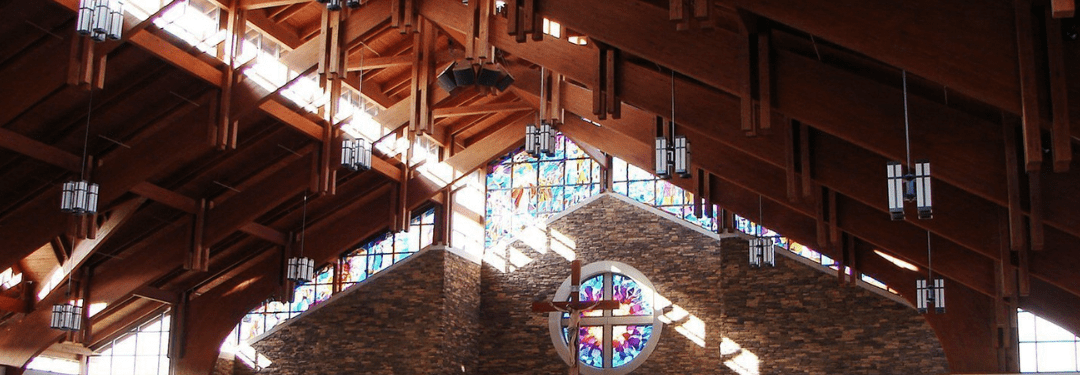
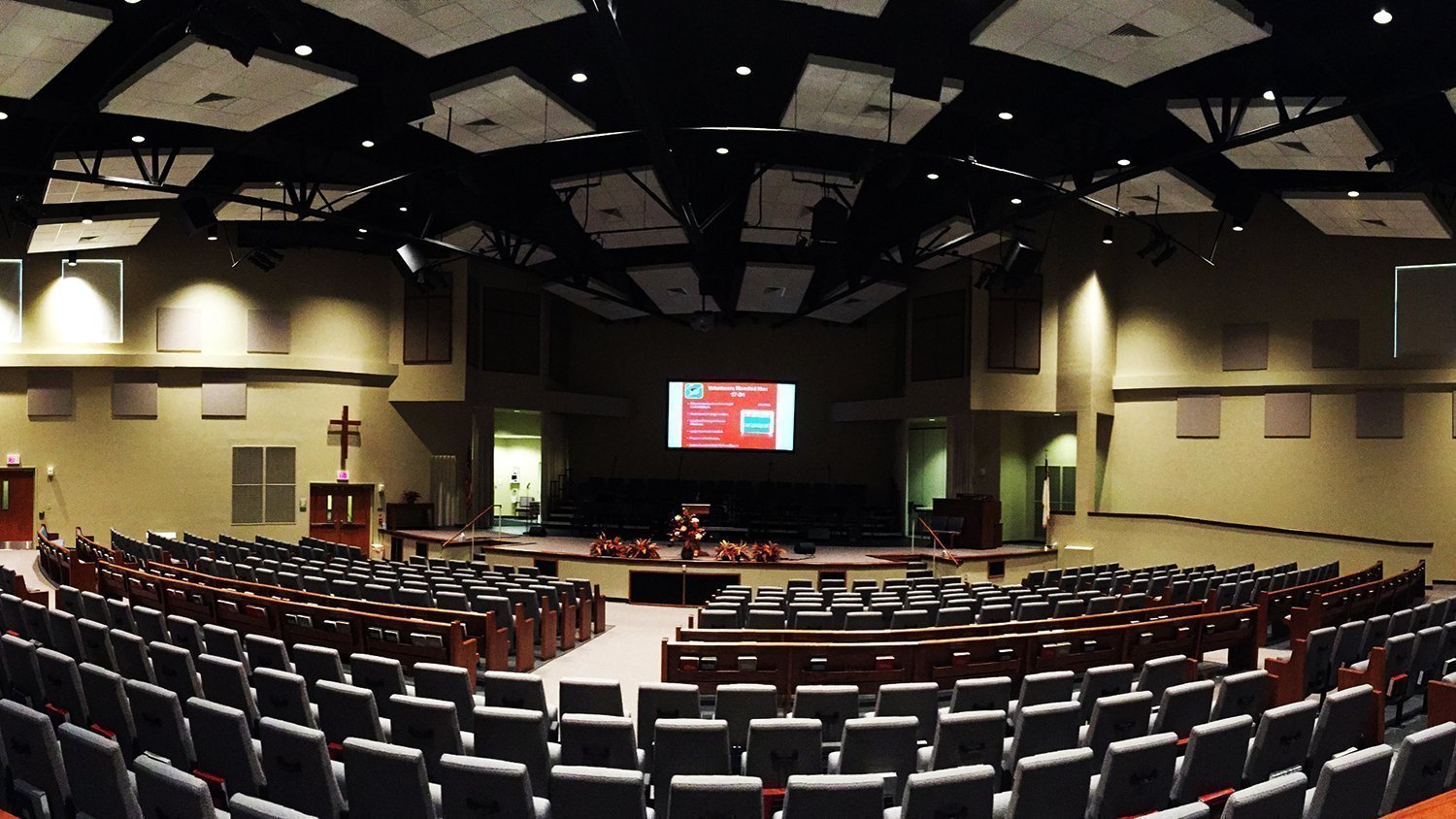
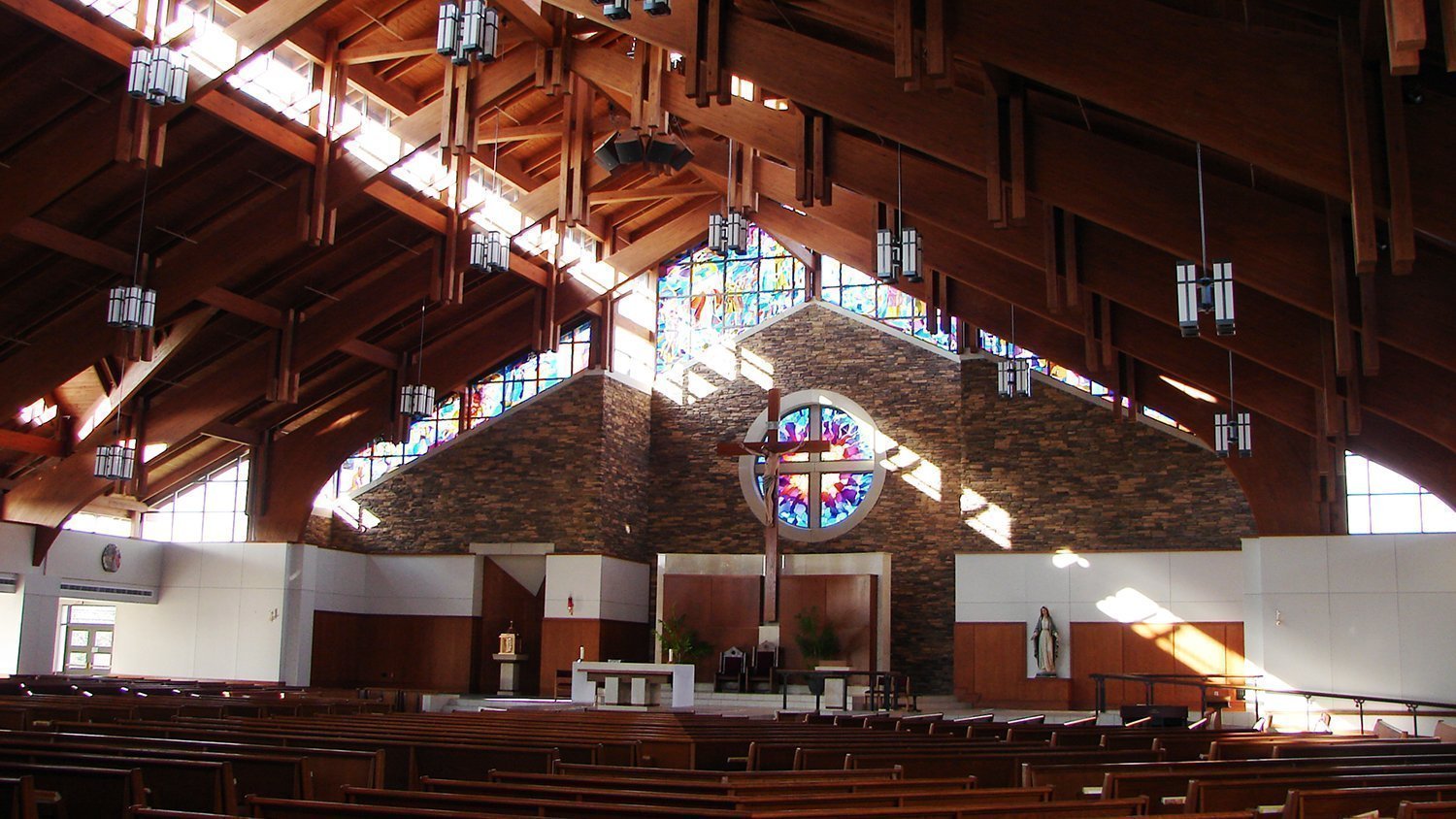
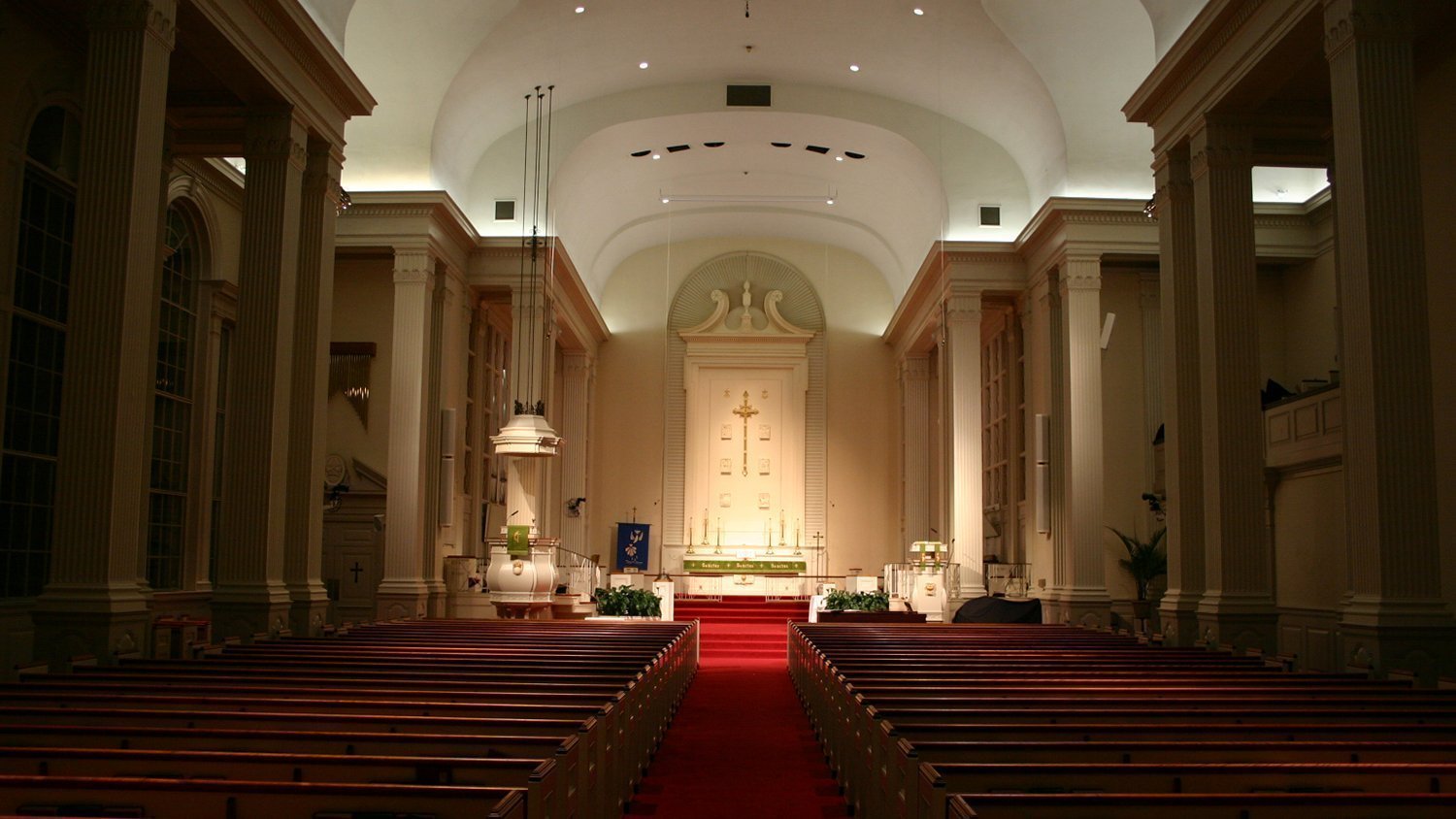
What is hanging over head at your church? Do you know without looking? From outside the sanctuary, grab a pen and paper and make a list of everything you can think of. Now, walk into the sanctuary and look up. Did you miss anything? Speakers, video displays, light fixtures, chandeliers, trusses, acoustical clouds, suspended ceiling, curtains, pipe grid, pipe battens, chain hoists, cameras, scenic elements, and a cross are some of the items you might see. You probably have more than you realized. Churches of any size are likely to have at least a half dozen of these items. Now I ask, how are these items hanging? Safely? If so, how do you know?
The “Guys”
Every church has a sound guy, at least one. He or she mixes the audio at every service, funeral, wedding, or event. The sound guy typically is not alone and next to him is the video guy, who switches and shades cameras, puts up the song lyrics on the screen, or cues a video.
Another position is the lighting guy, a position of which the congregation is sometimes not even aware. He or she brings up the lights on stage, cross fades to change the focus over to the choir, then the band, and then highlights the preacher. The lighting guy uses a console or software that the congregation has never heard of and every once in a while, someone will ask them to turn down the music … because it is too loud.
Lighting
Satire aside, we should agree that there is much that goes into the technical side of a church service. Regarding lighting, how did those lights get there anyway? Someone climbed up the ladder, clamped a fixture to the pipe, plugged in power/control and then focused it. There was much thought that went into where to put the light, what type of light, what the wattage of the light is, what circuit to connect it to, and what type power is required (voltage, dimmed, constant). And multiply this by the number of fixtures in the rig. It could be a few, or a few hundred.
Whatever the size of the church or the lighting system, the users must be knowledgeable, trained, and qualified to do whatever work they are tasked with. Or minimally, under the direct supervision of someone who is. How can church management ensure this is the case? Certification is one method that is working well in our industry.
ESTA & ETCP
Entertainment Services and Technology Association (ESTA) is a non-profit trade association based in North America. It runs the Technical Standards Program, which creates, develops, and maintains the American National Standards Institute (ANSI) standards for our entertainment technology industry. ESTA is the co-organizer of the now annual New World Rigging Symposium – a conference dedicated to entertainment rigging. In addition, the group administers the Entertainment Technician Certification Program (ETCP).
ETCP has been running for almost 15 years and offers four certifications that are recognized industry-wide: Rigger – Theatre, Rigger – Arena, Entertainment Electrician, and Portable Power Distribution Technician. These certifications are voluntary, and ETCP is the nongovernmental organization that grants recognition to an individual who has demonstrated mastery in a discipline. In other words, certification is a highly credible and reputable achievement where the technician has proven his or her capabilities.
Going back to church management, requiring technicians, or at least supervisors, to be certified is strongly encouraged. Knowing that certified personnel are responsible for the church’s systems, including safety, should help mitigate risk.
Going back to church management, requiring technicians, or at least supervisors, to be certified is strongly encouraged.
Codes
Electricity is dangerous (can be life threatening) but, in an installed system in the United States, we have the National Electric Code (NEC). In short, the Code is here to protect us all. Engineers design to (minimally) meet the Code, contractors install to meet the Code, and authorities having jurisdiction inspect to the Code. For example, the Code requires over-current protection like circuit breakers to prevent overloading of the wiring and receptacle. It specifies what type and size of wire to use in a given application and arc flash labeling of panels, which inform the worker what level of personal protection equipment (PPE) they must have on in order to open or work on the panel.
Unfortunately, we have no such code for rigging. We have voluntary national standards and structural engineers, like the one that designed the building’s structure. Engineers can tell us the capacity of the beams, joists, walls, floors, and roof, which we need to know in order to proceed with rigging.
Rigging
Rigging is a broad but specialized topic and starts with the building structure. These structures are unique and vary in strength, material, construction, and size. The most common structures are joists (steel or wood), purlins, glued laminated (glulam) timber, and steel beams. Rigging systems are complex and vary depending on application. Some examples include dead-hung, pipe grid, counterweight, clew-winch, motorized hoists (chain or wire rope). Rigging has to be coordinated carefully with the ceiling structure, duct work, architectural lighting, sprinklers, plumbing, basketball nets, and acoustical ceilings. When rigging from above is not an option, we turn to floor-mounted structures, which may be scenic only or structural to support audio, video and lighting.
Is your system rated? Is the capacity known? When was the last time the system was inspected? You should know these answers! The rigger’s job is to keep everything and everyone safe. Numerous manufacturers, guidelines, and standards all tell us that we need to have our systems inspected (at least) annually and have a written report to document the deficiencies. Having an on-staff ETCP rigger is a great place to start with implementing and/or facilitating inspections, repairs, and maintenance. All of which should be documented with logs kept on file. If you do not have enough rigging or electrical work to keep certified personnel on staff, you can search for a technician, using the search function on the ETCP website: http://etcp.esta.org/search.
Final Words
Just about every church is unique. It has its own personality and character. The size, shape, and finishes all contribute to define its individuality. From large open spaces to small intimate ones, tech-heavy to minimalistic, all have some form of audio visual and lighting aspect. Management should share concerns about safety of the building, systems, and their people. Lighting and rigging are dangerous and can be fatal, if improperly used, which is why the users must be knowledgeable, trained, and qualified–or better yet–certified.
What certifications apply to churches?
- ETCP Entertainment Electrician, includes Portable Power Distribution Technician and lighting controls, fixtures, and special effects.
- ETCP Portable Power Distribution Technician, subset of the Entertainment Electrician focusing on portable power cabling
- ETCP Rigger – Arena, everything rigging unless your venue has counterweight rigging
- ETCP Rigger – Theatre, emphasis on counterweight rigging in a proscenium venue
Resources